Tax Benefits You Get When You Buy Your First Home at Purva Northern Lights

Buying your first home feels big. And it should. But there is one part most first-time buyers overlook completely: the tax savings that come with a home loan.
Once you take a home loan to buy a flat, the government allows you to reduce your taxable income every year. That means you pay less income tax. This is not a loophole. It is a set of rules built into Indian tax law to support homeownership.
If you are buying a flat at Purva Northern Lights in KIADB Aerospace Park, Bagalur, this guide breaks down every benefit you can claim, what the limits are, and what mistakes to avoid.
Why a Home Loan Is More Than Just Borrowing Money
Most people think of a home loan as a burden. Thirty years. High EMIs. That is the common worry.
But here is the other side. Every rupee of EMI you pay has two parts: the principal and the interest. The Indian government lets you deduct both from your income before tax is calculated. That brings your taxable income down. A lower taxable income means a smaller tax bill.
For salaried buyers in the 30% tax bracket, this can translate to real cash savings of over one lakh rupees a year. That is money that stays in your account instead of going to the government.
Rent gives you zero of this. You pay rent and it is gone. When you pay an EMI, part of that money is building equity in an asset you own.
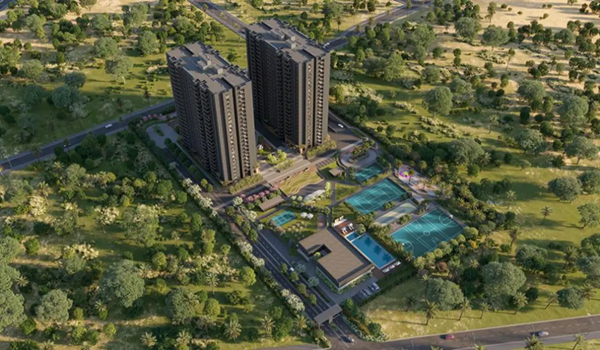
A Quick Look at Purva Northern Lights
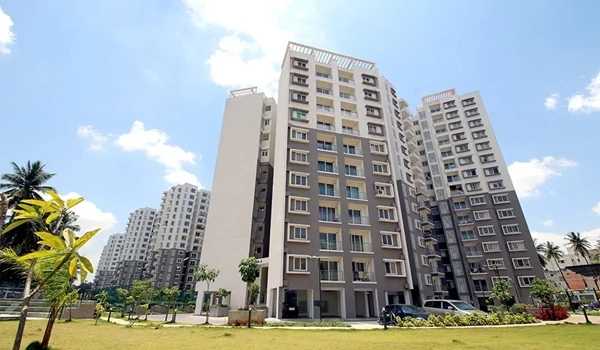
Before getting into the tax rules, here is the basic project snapshot.
- Developer: Puravankara Limited
- Location: KIADB Aerospace Park, Bagalur Road, North Bangalore
- Total Area: 24.59 acres
- Towers: 8 towers across 3 phases
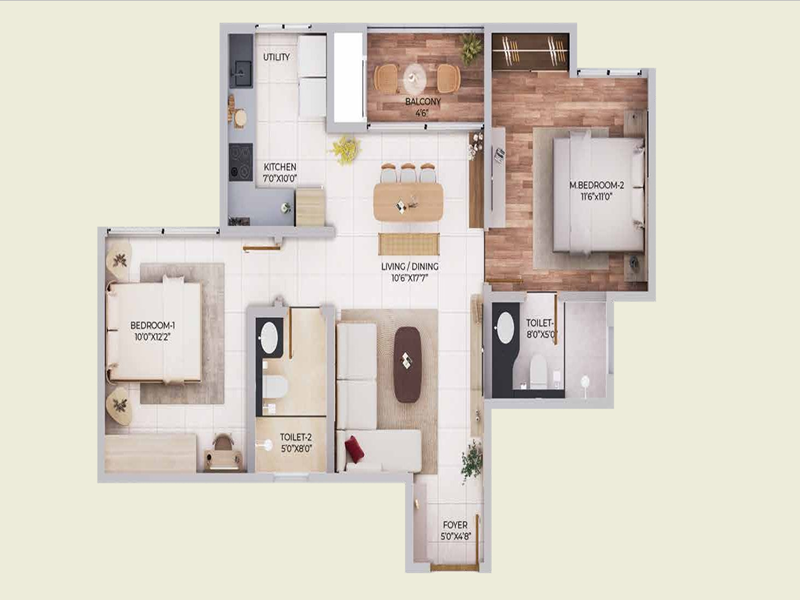
- Unit Types: 1 , 2 , 3 , & 4 BHK
- Starting Price: Around Rs. 80 lakhs for 1 BHK in Phase 1
- RERA Number: PRM/KA/RERA/1251/309/PR/120326/008523
- Possession: December 2029
The project is under construction. That matters for one specific tax rule, which is explained below under pre-construction interest.
Section 80C: Deduction on Principal Repayment
Every month, a part of your EMI goes toward paying back the loan amount itself. This is called the principal repayment.
Under Section 80C, you can claim a deduction of up to Rs. 1.5 lakh per year on this principal amount.
This falls under the same 80C bucket that includes PPF, ELSS, and life insurance premiums. So if you have already used up that Rs. 1.5 lakh limit with other investments, the home loan principal adds to the same pool rather than giving you extra room.
What Also Falls Under 80C from Your Home Purchase
- The stamp duty paid at registration
- The registration charges paid to the government
Both of these can be claimed under Section 80C, but only in the year you actually pay them. This is a one-time benefit, not an annual one.
One Important Condition
The 80C deduction on home loan principal is only available under the old tax regime. If you have switched to the new tax regime, you cannot claim it. Confirm with your tax advisor which regime works better for you before deciding.
Also, if you sell the property within five years of possession, the government claws back all the 80C deductions you claimed over those years. They get added back to your income in the year of sale.
Section 24b: Deduction on Home Loan Interest
This is where most buyers save the most money.
Under Section 24b, you can claim a deduction of up to Rs. 2 lakh per year on the interest portion of your home loan. This applies if the property is self-occupied, meaning you live in it yourself.
For a loan of Rs. 80 to 90 lakhs at current interest rates, annual interest paid in the early years is usually well above Rs. 2 lakh. So most buyers claiming this benefit hit the ceiling fairly quickly.
If the property is rented out, there is no upper limit on the interest deduction. You can deduct the full interest paid against the rental income received.
When Does the Deduction Start?
You can only start claiming Section 24b interest on your completed home from the year you receive possession. For Purva Northern Lights, possession is expected in December 2029.
Pre-Construction Interest: What Happens Before Possession?
Purva Northern Lights is an under-construction project. If you take a home loan now, the bank starts charging interest from the time of the first disbursement. But you cannot claim that interest as a deduction right away because possession has not happened yet.
Here is how it works.
The interest you pay from the date of the loan disbursement until the end of the financial year before possession is called pre-construction interest. Once you get possession, you can claim this accumulated amount in five equal parts over five years.
Example
Say your loan is disbursed in mid-2026 and possession happens in late 2029. You pay interest for about three and a half years before possession. That total pre-construction interest is then divided into five parts and claimed from 2029 onwards, along with the regular Section 24b deduction of up to Rs. 2 lakh per year.
This is a benefit most under-construction buyers forget to track. Keep all your bank statements and interest certificates from the start of the loan.
Tax Benefit Summary Table
| Tax Section | What It Covers | Maximum Deduction Per Year | Key Condition |
| Section 80C | Principal repayment on home loan | Rs. 1,50,000 | Only under old tax regime |
| Section 80C | Stamp duty and registration charges | Included in Rs. 1.5 lakh limit | Claimable only in year of payment |
| Section 24b | Interest on home loan (self-occupied) | Rs. 2,00,000 | Claimable after possession |
| Section 24b | Pre-construction interest | 1/5th of total per year for 5 years | Claimed after possession in 5 parts |
| Joint loan | Both co-borrowers claim separately | Rs. 3.5 lakh each (combined Rs. 7 lakh) | Both must be co-owners on property documents |
| Section 80EEA | Additional interest deduction for first-time buyers | Rs. 1,50,000 (if eligible) | Loan sanctioned before March 2022 deadline; check current year rules |
Joint Home Loan: Double the Tax Savings
If you buy the flat jointly with your spouse or any co-borrower who also has an income, both of you can claim tax deductions separately. Each person claims based on their share of repayment.
Here is what that looks like in practice.
| Deduction Type | Buyer 1 | Buyer 2 | Combined Saving |
| Section 80C (Principal) | Rs. 1,50,000 | Rs. 1,50,000 | Rs. 3,00,000 |
| Section 24b (Interest) | Rs. 2,00,000 | Rs. 2,00,000 | Rs. 4,00,000 |
| Total Deduction | Rs. 3,50,000 | Rs. 3,50,000 | Rs. 7,00,000 |
For a couple both in the 30% tax bracket, this means combined tax savings of around Rs. 2.1 lakh every year.
There is one rule to note. Both people must be co-owners on the property documents. If only one person's name is on the sale deed, only that person can claim the deduction. The joint loan structure only works when both loan and ownership are shared.
A Simple Worked Example
Rohan buys a 2 BHK at Purva Northern Lights for Rs. 1.2 crore. He takes a home loan of Rs. 90 lakhs at 8.75% for 20 years.
In the first full year after possession:
| Item | Amount | Section |
| Principal repaid | Rs. 1,50,000 | Section 80C |
| Interest paid | Rs. 2,00,000 | Section 24b |
| Total deduction from income | Rs. 3,50,000 | Both combined |
If Rohan is in the 30% tax bracket, he saves roughly Rs. 1,05,000 in income tax that year. That amount effectively reduces what his home loan actually costs him each month.
If his wife is also a co-borrower and co-owner with a separate income, the household saves Rs. 2.1 lakh together every year.
Stamp Duty and Registration: A One-Time but Useful Deduction
In Karnataka, stamp duty on residential property is generally around 5% to 6.6% of the property value. Registration charges are typically 1%.
On a Rs. 1.2 crore flat, that comes to roughly Rs. 6 to 8 lakhs in stamp duty and registration combined.
Under Section 80C, you can claim these amounts as a deduction in the year of payment. Since the limit is Rs. 1.5 lakh and this payment is large, you will likely use the full limit in that one year. But it still gives you the full Rs. 1.5 lakh deduction in the year of registration, even if you do not have any EMI principal hitting that year.
Keep the challan receipts and registration documents. Your tax advisor will need them.
Common Mistakes First-Time Buyers Make
Not tracking pre-construction interest. Many buyers do not collect loan statements during the construction period. By possession, they have no record of the interest paid. That means they lose the five-year deduction benefit entirely.
Choosing the new tax regime without checking. The new regime has lower slab rates but removes most deductions including 80C and 24b. For buyers with a large home loan, the old regime often saves more money overall. Run the numbers before deciding.
Putting only one name on the sale deed. If you want joint tax benefits, both names must appear on the property document. A joint loan with a single-owner property does not give both people the right to claim.
Selling within five years of possession. If you do this, all the 80C deductions you claimed get reversed and added back to your income in the year of sale. Plan your holding period before buying.
Not collecting the annual interest certificate from the bank. Banks issue this each year showing the split between principal and interest in your EMI payments. You need this to file correctly.
Does Section 80EEA Still Apply?
Section 80EEA was introduced to give first-time buyers an additional Rs. 1.5 lakh deduction on home loan interest, over and above the Rs. 2 lakh under Section 24b. This was available for loans sanctioned up to a certain date.
The eligibility window for 80EEA has changed over budget cycles. As of 2026, check with your bank or chartered accountant whether your loan disbursement date and property value make you eligible. Do not assume it applies without verifying the current rules.
Frequently Asked Questions:-
1. Can I claim tax benefits while Purva Northern Lights is still under construction?
Not immediately. The interest paid during construction is tracked and claimed in five equal parts starting from the year of possession. Section 80C on principal also begins only after EMIs start.
2. What is the maximum I can save on interest under Section 24b? Up to Rs. 2 lakh per year for a self-occupied property. If both spouses are co-owners and co-borrowers, each can claim Rs. 2 lakh separately.
3. Is the GST paid on the flat deductible?
No. GST paid on an under-construction property is not deductible under any income tax section. Only stamp duty and registration charges are allowed under Section 80C.
4. Can I switch between old and new tax regimes every year?
Salaried individuals can switch once a year at the time of filing returns. However, once you choose the new regime as a business taxpayer, switching back has restrictions.
5. What documents do I need to claim home loan tax benefits?
You need the home loan interest and principal certificate from the bank (issued yearly), the sale deed or possession letter, and stamp duty and registration receipts. Keep all of these from the beginning.
6. If I rent out my flat at Purva Northern Lights, how does the tax treatment change?
For a rented property, the Rs. 2 lakh cap on interest deduction under Section 24b does not apply. You can deduct the full interest paid from the rental income. Any remaining loss can be set off against other income up to Rs. 2 lakh per year and carried forward.
7. Can I claim benefits if the home loan is in my name but the property is in my spouse's name?
No. To claim tax deductions on a home loan, you must be both the borrower and an owner of the property. If your name is not on the sale deed, you cannot claim the deduction even if you are repaying the loan.
8. Is Purva Northern Lights RERA-registered and does that help with loans?
Yes. RERA registration number PR/120326/008523 is issued for Phase 1. Banks generally process home loans faster for RERA approved projects. All project documents are legally compliant and accepted by lenders without additional queries.