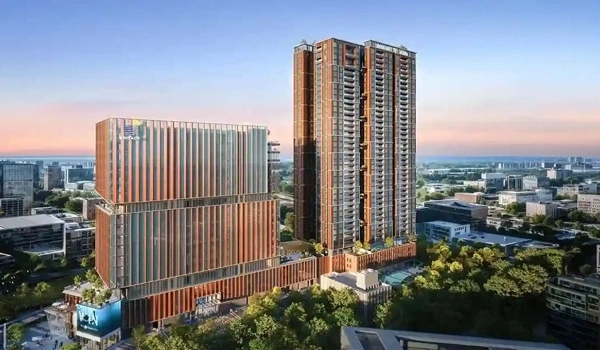
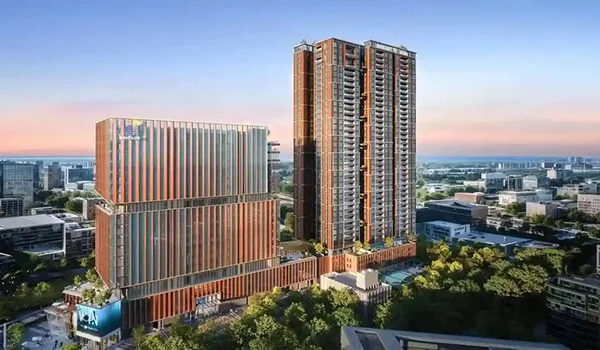
Sunlight and Science: How Purva Northern Lights' Orientation Is Built for Your Health
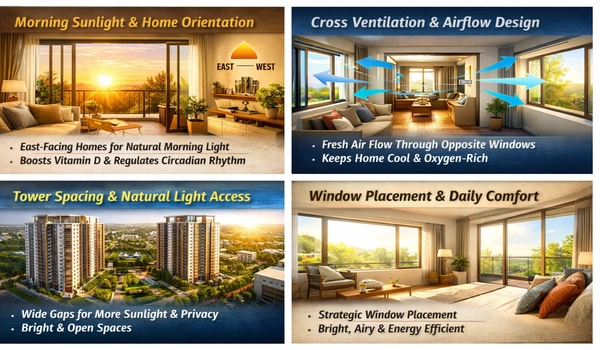
When house hunting, most of us check the price tag, the floor plan, and the view. We rarely pause to ask if the living room gets good morning sun or if fresh air actually moves through the hallways. Yet, these details shape how we feel every single day.
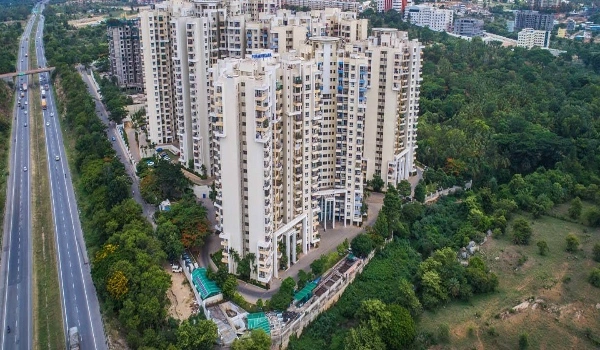
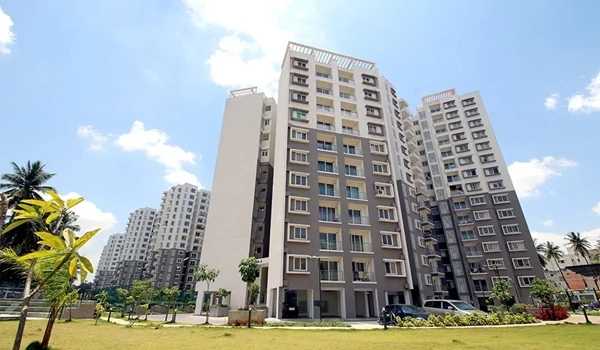
At Purva Northern Lights in KIADB Aerospace Park, Bagalur, the layout of the buildings is highly intentional. The direction each home faces, the gaps between the towers, and where the windows sit are all based on health science. Let's break down exactly how this works.
Why Building Orientation Affects More Than Just Light
The direction a building faces—its orientation—controls the amount of sunlight and wind it catches.
Think about a poorly placed apartment. The rooms might feel dark until noon, and the air just sits there, feeling heavy. You end up running the fan or AC constantly just to breathe comfortably.
On the flip side, a well-placed home naturally pulls in light when you need it and lets a breeze roll through without you having to touch a thermostat. The home quietly supports your health in the background. That is the core idea behind Purva Northern Lights.
How the Sun Path Shapes Every Floor Plan
Tracking the Sun Across Bagalur
The sun rises in the east and sets in the west, but its exact angle changes depending on the season. Because Bangalore sits near 13 degrees north latitude, the architects studied these shifting solar patterns to see how light would hit the property all year long.
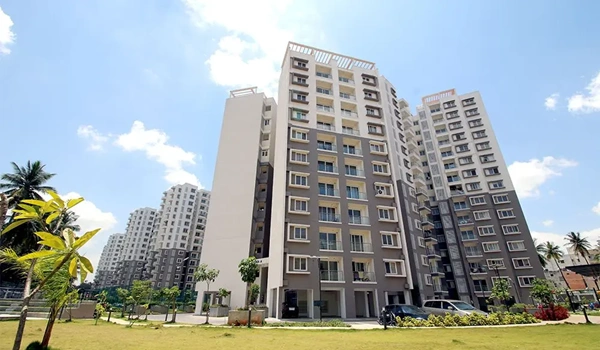
Using this mapping, the three towers at Purva Northern Lights are angled to:
- Catch the early morning sunshine in east-facing rooms.
- Block the harsh, baking afternoon heat from west-facing windows.
- Keep the towers from casting long shadows on each other, ensuring lower floors stay bright.
- Pull natural daylight deep into the living spaces for hours at a time.
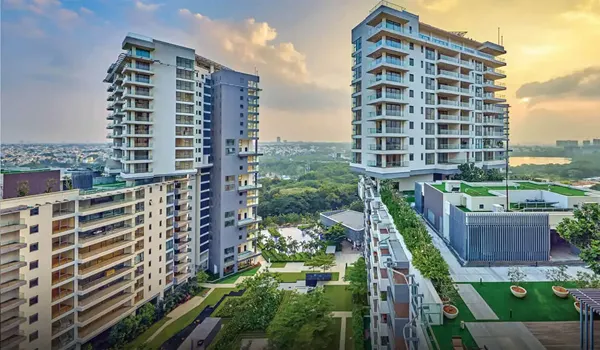
These buildings stand between 91 and 99 meters tall. Because they easily clear most surrounding structures, homes on the middle and upper floors get a steady stream of natural light all day.
Why Morning Light Is Different from Afternoon Light
Not all sunlight does the same job for your body.
Morning sunshine is packed with blue-spectrum light. This acts as nature's alarm clock, telling your brain to pump out cortisol. That is the hormone that makes you feel awake, sharp, and ready to tackle the day.
As the afternoon rolls in, sunlight takes on warmer, softer tones. This shift is a biological cue for your body to start winding down.
When your apartment catches the right kind of light at the right time, your internal clock stays on track. You sleep sounder, your energy stops crashing in the afternoon, and your mood levels out. The floor plans here place morning hubs (like main living areas) facing east, while spaces meant for evening relaxation are tucked away from the harsh western glare.
Circadian Architecture: Designing Homes Around Your Body Clock
Your circadian rhythm is essentially your body's internal 24-hour timer. It manages when you feel tired, when you feel focused, and even when you get hungry. Light is the absolute biggest trigger for this system.
Living in a space that matches the natural rise and fall of the sun keeps this rhythm humming. If you live in a perpetually dim apartment, that rhythm gets confused.
A disrupted body clock leads to real problems:
- Tossing and turning at night, even if you go to bed early.
- A midday brain fog that coffee cannot fix.
- Spikes in stress and a hard time concentrating.
Purva Northern Lights embraces "circadian architecture" to fix this. Here is how the lighting affects your routine:
| Time of Day | Light Quality in the Home | Health Effect |
| Early Morning | Bright, cool-toned east light | Wakes you up and boosts morning focus |
| Late Morning | Diffused light across living areas | Keeps you productive and alert |
| Afternoon | Controlled entry, minimal west glare | Stops the room from turning into an oven |
| Evening | Soft, warm ambient tones | Signals your brain to prep for sleep |
Cross-Ventilation Design: How Fresh Air Moves Through the Home
The Basic Science of Airflow
Cross-ventilation is a simple concept: air comes in through a window on one side of your home and pushes old air out through a window on the other side. This constant swapping keeps your indoor air feeling crisp.
It works because of air pressure. When the wind blows against a building, it creates high pressure on that wall and low pressure on the opposite side. The air naturally wants to rush from the high-pressure zone to the low-pressure zone, moving right through your apartment in the process.
How the 77% Open Space Ratio Enables Ventilation
Many city apartment complexes pack as many concrete blocks onto the land as possible. This blocks the wind and traps heat in the courtyards.
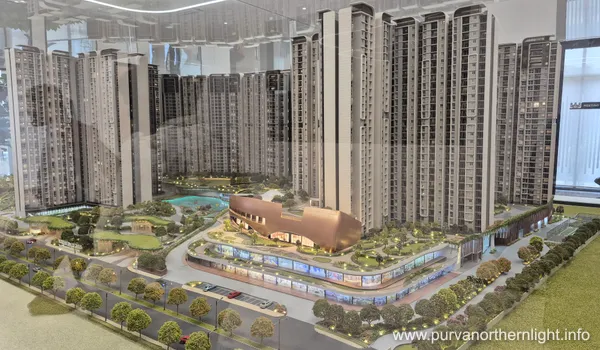
Purva Northern Lights takes the opposite route. The towers only take up 20% of the 24.59-acre plot. The other 80% is left wide open. This massive amount of space is the engine for the community's airflow.
Because the buildings are spaced so far apart:
- Wind freely sweeps across the grounds from multiple directions.
- The pressure differences that drive airflow stay strong.
- Fresh breezes easily reach the lower floors, not just the penthouses.
The towers are also staggered so they don't form a solid wall against the wind. This allows most apartments to enjoy a 270-degree cross-breeze.
What Happens When Air Does Not Move
Stagnant air is rough on your health. Without fresh breezes, carbon dioxide from our breath builds up. Dust, pet dander, and cooking moisture get trapped inside.
Eventually, this causes "Sick Building Syndrome." People end up with dry eyes, lingering headaches, and constant fatigue—symptoms that magically vanish when they leave the house. Good ventilation stops this dead in its tracks. Moving air flushes out the CO2 and allergens, keeping your home a healthy place to breathe.
How Orientation Reduces Heat Without Extra Energy
The Problem with West-Facing Glass
A giant west-facing window might look great in a brochure, but in a city like Bangalore, it acts like a magnifying glass. Between 2 PM and 6 PM, the low afternoon sun blasts heat straight into the room.
Your indoor temperature shoots up, forcing your AC to work overtime. It also makes the room uncomfortably warm well into the night, which ruins your sleep.
How Purva Northern Lights Manages Heat Gain
The architects specifically positioned the towers to limit how much direct western sun hits the main living spaces. Where they did place west-facing windows, they used smart architectural overhangs to block the harshest angles of the sun.
Because of this:
- Rooms stay naturally cooler during the hottest parts of the day.
- You do not have to blast the AC, which keeps your power bills low.
- Your bedroom cools down much faster in the evening.
Natural Light and Mental Health: What the Research Says
There is a massive amount of research linking natural sunlight to better mental health. Homes that lack decent windows often see residents dealing with higher anxiety and seasonal slumps.
Biologically, sunlight tells your brain to create serotonin—the chemical that makes you feel calm and happy. More sun usually means a much better mood.
Psychologically, bright and airy spaces just feel less restrictive. Having a wide view and plenty of light lowers cortisol, helping you actually relax when you get home. For remote workers, this is huge. A well-lit, breezy home office prevents the dreaded 3 PM burnout that happens so often in stuffy, artificially lit rooms.
Balconies and Living Areas: Where Design Meets Daily Life
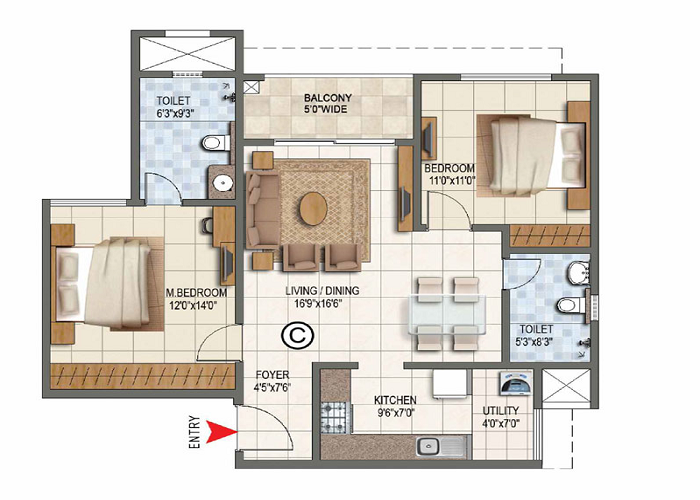
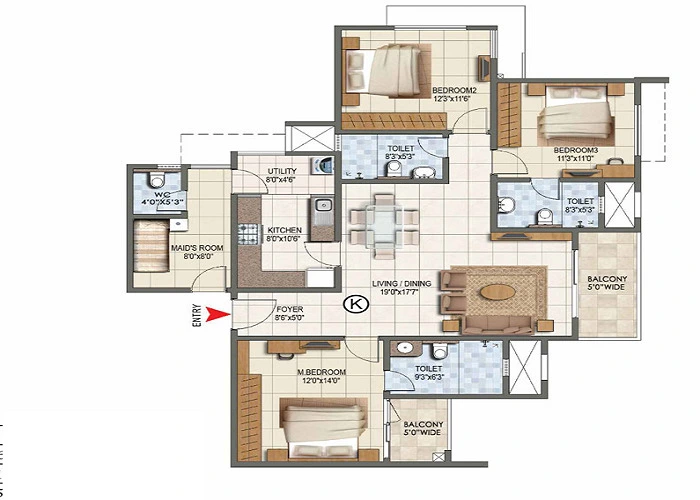
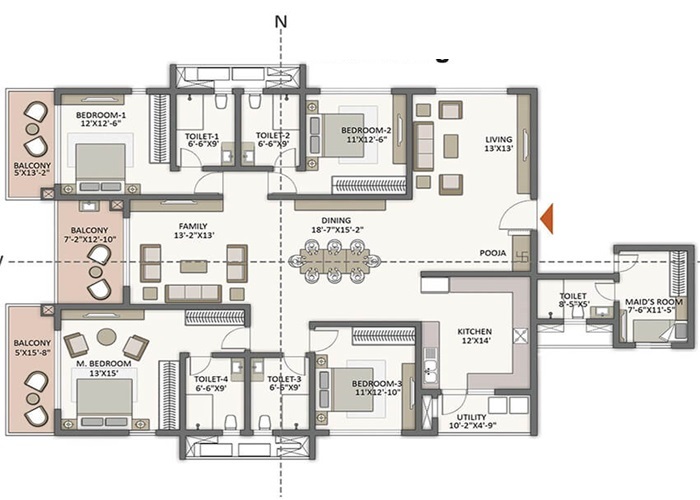
The balconies here are not just tiny ledges tacked onto the side of the building. They are angled to catch the best light and wind exactly when you want to be outside.
A well-placed balcony gives you:
- Clear, sweeping views over the Aerospace Park.
- Great natural light without blinding you while you try to read or work.
- A steady breeze, thanks to the tall towers and open layout.
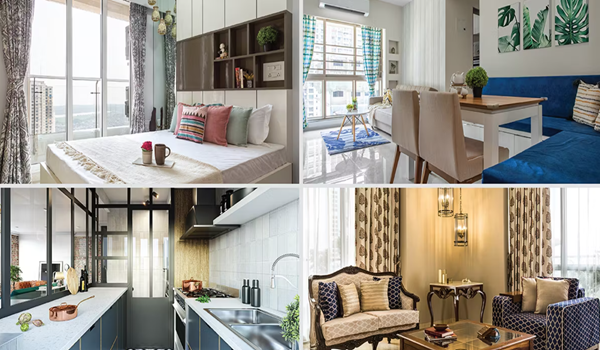
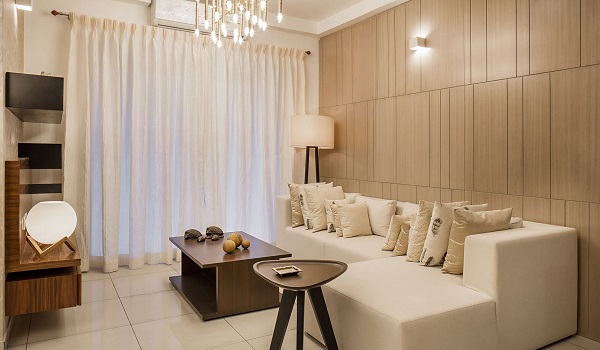
Meanwhile, the living rooms are positioned to soak up soft, diffused daylight. You get a bright, welcoming space that does not require you to flip on a light switch until the sun actually goes down.
Orientation vs. Conventional Design: A Side-by-Side Comparison
| Feature | Conventional Apartment Design | Purva Northern Lights Design | Health Impact |
| Natural light levels | Gets dark by mid-afternoon, needing lamps | Angled to bring in steady daylight all day | Cuts down on eye strain and lifts your mood |
| Air exchange | Windows on one side trap stale air | Open spacing pushes fresh breezes right through | Better breathing and fewer headaches |
| Heat management | Western windows bake the apartment | Smart angles block the worst of the afternoon heat | Rooms stay cooler, helping you sleep better |
| Circadian alignment | Random layouts confuse your body clock | East-West planning matches the natural day | Easier mornings and faster sleep at night |
| Mental space | Cramped buildings feel claustrophobic | 77% open space gives you room to breathe | Drops daily stress and feels less confined |
| Energy use | You run the AC and lights constantly | Natural cooling and lighting do the heavy lifting | Saves you money on electricity |
Frequently Asked Questions
1. How does the orientation of Purva Northern Lights actually improve my health?
The buildings are angled so your main rooms get morning sunlight and fresh breezes flow straight through the apartment. This setup naturally regulates your sleep cycle, keeps your indoor air fresh, and helps lower daily stress.
2. What exactly is cross-ventilation?
It is when wind enters through a window on one side of your home and exits through another. Because Purva Northern Lights leaves 80% of its land open, the wind has plenty of room to speed up and push fresh air through every single apartment.
3. How does the apartment layout help me sleep?
East-facing bedrooms catch the bright morning sun, which wakes you up naturally. As the sun sets, the light in the apartment shifts to softer tones, signaling to your brain that it is time to produce melatonin so you can easily fall asleep.
4. Is natural light really that important if I work from home?
Yes. Relying on overhead lights all day causes eye strain and mental fatigue. Steady, natural daylight boosts your serotonin, keeping you energized and focused throughout your entire workday.
5. Will this design actually save me money on electricity?
By physically blocking the harsh afternoon sun, your home stays cooler, so you do not need to run the air conditioning as much. The abundant daylight also means you will rarely need to turn on lamps during the day.
6. Are the balconies comfortable to use?
Definitely. They are specifically angled to catch a comfortable breeze and good light. Because the towers are tall and spaced far apart, the wind flow is consistent, making it a great place to sit without needing a fan.
7. Do most Bangalore apartments use this kind of health-focused design?
No. Most developers want to build as many units as possible on a piece of land. Giving up space to allow for better sun paths and wind flow requires leaving a lot of the land empty, which is why this approach is so rare.
8. Why does the 77% open space matter?
That massive amount of open room gives the wind a clear path to blow through the property. It also cools down the immediate area and gives you a visual break from concrete, which is great for lowering your stress levels.