Purva Northern Lights OC (Occupancy Certificate) — Timeline & What to Expect
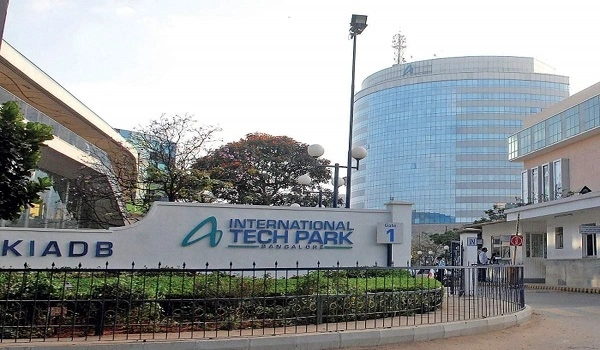
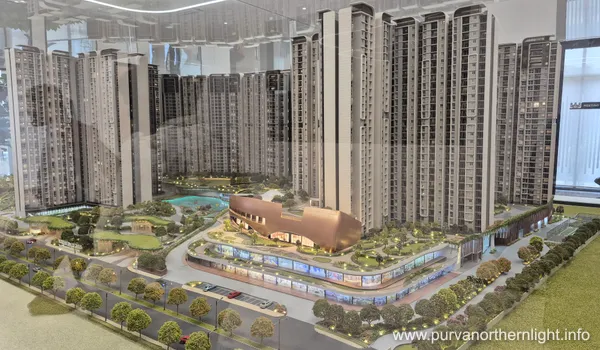
The Occupancy Certificate (OC) for Purva Northern Lights is the final approval given by the government. It shows that the 24.59-acre project in KIADB Aerospace Park is safe to live in and is built in the right way. The OC is expected by November 25, 2029, before the possession date of December 31, 2029. Getting the OC is important because it allows the builder to switch from temporary construction water and electricity to permanent and lower-cost connections. The timeline also ensures that all eight towers follow fire safety and government rules, making the handover smooth and allowing people to move in by early 2030.
Purva Northern Lights OC & Possession Timeline
The Purva Northern Lights project is in the KIADB Aerospace Park, Bagalur, North Bangalore. The project has a clear plan for building and legal approvals. By 2026, the project got official approval from RERA and started its new launch.
- RERA Registration & Legal Timeline
The Purva Northern Lights project is officially registered with Karnataka RERA, which is the government authority that checks if buildings are safe and legal. The project has three phases with these RERA numbers:
- Phase 1: PRM/KA/RERA/1251/309/PR/120326/008523
- Phase 2: PRM/KA/RERA/1251/309/PR/120326/008524
- Phase 3: PRM/KA/RERA/1251/309/PR/120326/008525
The official possession date is December 31, 2029, when buyers legally get their homes. There is also an extra 6-month grace period that will be given to the builder, which is until June 2030, to complete everything legally as per the project plan.
- Occupancy Certificate (OC) Timeline
The OC is an official legal document given by the government for any house in Bangalore. It clearly states to buyers that the building is safe to live in and that it was built according to the approved plan.
- When to Start: November 2029
- When to Expect it: November 25, 2029
Once the OC is received, the Purva Northern Lights developer can apply for permanent BESCOM (Electricity) and BWSSB (Water) connections, replacing temporary construction-line utilities.
- Detailed Construction Milestones (2026–2030)
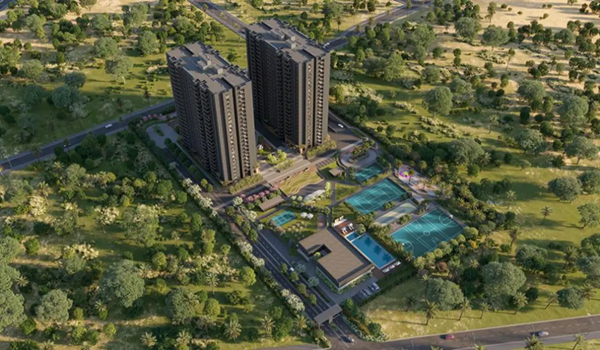
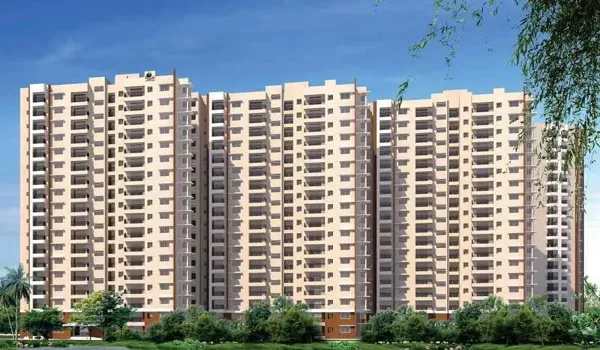
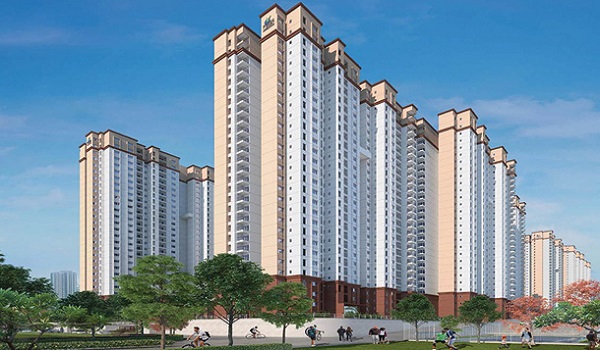
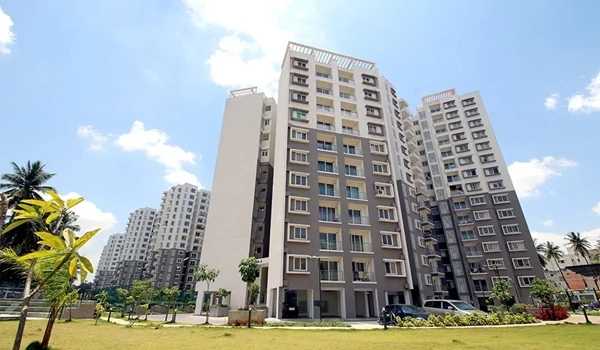
The Purva Northern Lights development covers 24.59 acres and consists of 8 high-rise towers (Basement + Ground + 31 Floors).
| Stage | Timeline | Key Activities |
| Stage 1: Preparation | Mar 2026 – Apr 2026 | Site mobilisation, land levelling, and boundary marking |
| Stage 2: Sub-Structure | Apr 2026 – Mar 2027 | Excavation, piling, and foundation work for all towers |
| Stage 3: Super-Structure | Aug 2027 – Dec 2028 | RCC framework, slab-by-slab construction for 31 floors |
| Stage 4: MEP & Finishing | Jan 2029 – Oct 2029 | Plumbing, electrical wiring, flooring, painting, and interior work |
| Stage 5: Inspection | Nov 2029 | Final safety inspections, fire NOC checks, and OC verification |
- Possession & Handover Process
Physical possession is planned to begin in early 2030, following three simple steps:
Step 1: Checking the Home
About 1–2 months before getting the keys, buyers visit their flat and check everything. They look for small problems like: paint marks, loose fittings and broken tiles. The builder fixes all these problems before giving the keys.
Step 2: Final Payment & Papers
Before getting the home, all payments must be completed:
- Last small payment (about 5–10% of the total cost)
- Government charges like registration fees
- Maintenance money for building care
After all payments are done, a possession letter is given.
Step 3: Getting the Keys
Once everything is checked and paid, the keys are given.
After that, owners can start interior work and move into the home legally.
What to Expect During the OC Phase?
The Occupancy Certificate (OC) phase is the last step before people can legally move into a building. At this stage, construction work is mostly finished, and the focus moves to government checks and final approvals.
Here is what happens during the OC phase for Purva Northern Lights:
- Government Inspections
Before giving the OC, different government departments visit the project site in the KIADB Aerospace Park. They check if all 8 towers are built exactly as per the approved plan.
They check:
- Building Safety: Engineers make sure the tall buildings are strong and safe
- Fire Safety: Fire officers check alarms, water systems, and emergency exits
- Environment Rules: Officials check that sewage systems and rainwater systems are working properly
- Plan Approval: They make sure there are no illegal changes in height, size, or layout
- Change from Temporary to Permanent Services
During construction, temporary electricity and water are used. After the OC process starts, permanent services are given:
- Electricity: Each flat gets its own permanent meter
- Water & Sewage: Permanent water and drainage connections are approved
- Flat Checking Before Handover (Snagging)
Around 30 to 60 days before getting the keys, each flat is checked carefully. This process includes:
- Quality Check: Floors, paint, and switches are checked
- Working Check: Doors, windows, taps, and fittings are tested
- Fixing Problems: Small issues are noted and fixed by the builder at no extra cost
- Final Payments and Legal Work
After the OC is ready, the final steps of buying are completed:
- Final Payment: Last 5% to 10% of the cost is paid
- Bank Loan: Banks release the last loan amount after OC
- Registration: The home is officially registered in the buyer’s name at the government office
- Residents’ Association Formation
Near the end of the OC stage, a group for residents is formed.
- This group helps manage the building and common areas
- It takes care of places like the clubhouse and shared spaces
- Slowly, control is handed over from the builder to the residents
Why is the OC Non-Negotiable in Bangalore?
In Bangalore, the Occupancy Certificate (OC) is not just a final paper after construction. It is the last and most important legal proof that a building is safe, follows all rules, and is ready for people to live in.
For a big project like Purva Northern Lights, the OC is very important for these five reasons:
- Proof of Legal Construction
The OC is the only paper that clearly shows the builder has followed the approved plan given by the BBMP or Greater Bengaluru Authority (GBA).
- No Rule Breaking: It proves the building does not break rules like height limits or space rules (FAR and setbacks)
- Safety Check: It confirms the tall towers are strong and meet fire safety rules
Without an OC, a building can be called illegal, which can lead to heavy fines or even demolition notices.
- Water and Electricity Connections
Water and electricity are very important for daily living. In Bangalore, services like BESCOM (electricity) and BWSSB (water) will not give permanent connections without an OC.
- Higher Costs: Without an OC, people may have to use temporary construction connections, which cost more
- Strict Rules: After a 2024 court decision, authorities have become very strict and do not allow permanent meters without an OC
- Mandatory for Home Loans and Resale
The OC is needed if someone wants a home loan or plans to sell the property later.
- Loan Release: Banks usually do not give the final 10% of the loan without the OC
- Resale Problems: Homes without an OC are seen as risky, and future buyers may find it hard to get a loan, which reduces the property value
- Getting an “A-Khata”
In Bangalore, homes are put into two types: A-Khata and B-Khata. An OC is usually needed to get A-Khata, which means the home is fully legal and clear.
- B-Khata Risk: Without an OC, a home may get B-Khata, which is not fully legal
- The Problem: It becomes hard to get building approvals or business licenses for a B-Khata home
- Staying Safe and Legal
Living in a building without an OC is not allowed by law.
- Risk of Leaving: Authorities can ask people to move out because the building is not officially approved as safe
- Insurance Issues: If something like a fire or accident happens, insurance companies may not pay money if there is no OC